The Importance of Magnesium in Fibromyalgia

We hear it all the time, another supplement that we should take. Something else to swallow, but why? My personal opinion as a Fibromyalgia patient is that I’ll swallow 30 supplements over 30 prescriptions any day. The human body is designed to heal, if we feed it naturally. How did we last this long in the role of evolution, if we weren’t designed to grow, learn, heal, and adapt?

Magnesium is necessary for human bodily function. In fact, for the role of a patient that has neuropathic pain and pain hypersensitivity magnesium can decrease this effect. Magnesium blocks the calcium influx that decreases that hypersensitivity and inhibits central sensitization from happening in the first place. What’s important to note is that as we age our magnesium consumption seems to lower, and our capability of absorption decreases leading to inflammatory stress and poor sleep quality.

A study titled Psychological and Sleep Effects of Tryptophan and Magnesium-Enriched Mediterranean Diet in Women with Fibromyalgia actually concluded with the following information.

“Daily consumption of a Mediterranean-diet enriched with a high dose of TRY and MG (60 mg of TRY and 60 mg of MG) by middle-aged women with fibromyalgia during 16 weeks had modest beneficial effects on emotional processing, decreased fatigue, anxiety, and depression, and reduced possible eating disorders and dissatisfaction with body image, but did not modify sleep quality,” states the MDPI website on Environmental Research and Public Health.

I’m certain, as a patient myself, that most of us do not get proper nutrition with the varying different co-morbid conditions that we have. Especially for ones that suffer from heartburn influxes, and irritable bowel, and swallowing issues. After all our central nervous systems are all dysfunctional, our receptors are on full volume, we are lucky to have the energy to cook let alone consume food at all somedays.

Several research studies have shown that patients with chronic pain do not follow the recommended dietary intake of most vitamins and minerals; and such deficiencies have been associated to several pathological conditions of chronic pain, including FM. Additionally, studies have investigated the impact of magnesium (Mg) on pain improvement. Mg is an important trace element for many metabolic functions, also vital for the activity of over 300 enzymes. Mg deficiency has been associated to headache, migraine, fibromyalgia, increase in C-reactive Protein (CRP), osteoporosis, cardiovascular disease, and other conditions,” states the BMC website on Advances in Rheumatology.

Fatigue, muscle weakness, irritable bowel, and paresthesia are similar to the symptoms of deficiency in Mg, which are all symptoms of FM. If a Mg deficiency does exist, it may have a shared link among stress, inflammation and metabolic syndrome, this may cause an inappropriate response with the activation of intracellular calcium (Ca). So it stands to reason to supplement Mg when necessary. Magnesium (Mg) deficiency actually has a name, it’s called Hypomagnesemia.

Although more than 99 % of the total body magnesium is located in the intracellular space, intracellular magnesium measurement is not included in daily basis in the clinical laboratory, being measured in serum and/or plasma. Hypomagnesemia – considered when serum magnesium concentration is below 0.7 mmol/L– is common, especially in subjects with comorbid conditions. The causes of hypomagnesemia can be broadly classified into four categories: gastrointestinal loss, renal loss, secondary to medications, and decreased intake. The prevalence of hypomagnesemia depends on multiple factors and varies according to different healthcare scenarios: 2.7 % in the general population, approximately 10 % in hospitalized patients, most commonly in critically ill patients, 14.7 % in patients with chronic kidney disease, 30–80 % in persons with alcohol use disorder and 10–60 % in patients with diabetes. Mild deficiency can remain undetected because it often presents non-specific symptoms, such as irritability, nervousness, mild anxiety, muscle contractions, weakness, fatigue, and digestive problems. A more pronounced magnesium deficiency can cause more severe symptoms of neuromuscular, cardiac, or nervous disorders,” states the De Gruyter website.

Okay, the big question, which is the best magnesium to take?! There seems to be a plethora of them to choose from. Personally, I take a triple form of Magnesium. The most highly absorbable is actually organic magnesium salts. If you can tolerate Magnesium by mouth, using Magnesium Citrate, Glycinate, Malate can help. Be forewarned that Magnesium Oxide is the one that has the tendency to have the most pronounced gastrointestinal issue effects. I highly recommend especially for FM patients to avoid Magnesium Oxide especially if you already have IBS, we want our small bowel to absorb the magnesium to help ourselves at the intracellular level rather than reject it.

A daily dose of 800–1,600 mg (40–80 mEq [20–40 mmol]) can be used to treat moderate to severe hypomagnesemia. Patients with gastrointestinal disorders that are not easily correctable can be challenging to treat because oral magnesium preparations can cause diarrhea and potentially worsen the deficit. Oral preparations should be started at the lowest dose and only gradually increased. Magnesium oxide tends to cause more gastrointestinal intolerance than other oral preparations” states the De Gruyter website.

What got me started on the Magnesium pathway to begin with is that my blood pressure was all kinds of crazy and no heart medicine they put me on did anything for it. I had paresthesia in my veins (where they shrink) and in my carotid arteries to my brain. Once I started my supplementation my blood pressures started to calm down a bit, they are not perfect but doing way better than they used to be.

Like many other vitamins and minerals that work hand in hand. It is important that if you are supplementing with Magnesium that you are also taking a Vitamin D supplement for maximum potential of absorption.

Magnesium absorption and excretion are influenced by different hormones: 1,25 dihydroxy vitamin D can stimulate intestinal magnesium absorption, estrogens are known to stimulate TRPM6 expression and parathyroid hormone (PTH) is involved in magnesium reabsorption in the kidney, absorption in the intestine, and release from bone excretion” states the De Gruyter website.


Learning about Folate and Cobalamin

It’s been several months now, and I’m going to start sharing with you the really awesome part of my life. I’ve not needed prescriptions, and I’m tackling Mast Cell Activation, Fibromyalgia, Interstitial Cystitis, and all the other junk that goes along with these nasty things Naturally. Recently, my friend and I were discussing the importance of Folate (Methylfolate) and Cobalamin (Vit B12).

“Vitamin B12 deficiency is more prevalent in the elderly and can develop as a result of malnutrition, malabsorption, chronic alcoholism, and chronic use of common medications (e.g. metformin, PPI, methotrexate) along with other causes. A wide spectrum of hematological and neuropsychiatric manifestations exist with the most common being Megaloblastic anemia and subacute combined degeneration, respectively. The mechanisms leading to the manifestations specific to these two organ systems are thought to be different. The severity of neuropsychiatric presentation is reported to be inversely proportional to that of hematological presentation, thus making it uncommon for both to be readily apparent simultaneously, ” states the PUBMED website.

What does that mean for us? Cobalamin (Vitamin B12) deficiency can impact many different factors in our lifestyles just from neurological to neuropsychiatric by themselves. Cobalamin is very important when dealing with pain and varying symptoms in Fibromyalgia Syndrome (FS).

“Vitamin B12 (VB) is a necessary vitamin for routine cell activity and metabolism. A deficiency in VB causes symptoms that are also frequently observed in FS, such as weakness, fatigue, general muscle pain, and sleep disturbances. Interestingly, subnormal VB levels may cause these symptoms. Previous studies have reported that FS patients have similar VB levels to healthy individuals. VD deficiency was associated with fatigue and generalized pain. VD deficiency is seen much more often in females than males, and FS is usually seen in females,” states the Sciendo website.

What makes it interesting to know is that Cobalamin deficiency can be caused by medications such as anti-seizure medications, and H2 histamine antagonists. These are medications such as gabapentenoids, and heartburn prevention medications and histamine blockers. These are medications that are regularly taken by Fibromyalgia patients.

“VB deficiency could disrupt methionine synthesis enzyme activity and cause nerve demyelination. Demyelination of the nerves causes a decrease in the pain threshold and general body pain in patients. There is a strong relationship between VB levels and general body pain, and most patients’ pain symptoms may decrease with VB supplementation,” states the Sciendo website.

Knowing that FS also includes a high occurrence of patients that also have small fiber neuropathy and that with a cobalamin (VB) deficiency can cause nerve demyelination makes it blatantly obvious that it can actually contribute to our pain receptor dysfunction.

Folate can be found in leafy green veggies like kale. OldieFan/Pixabay

So along with co-morbid conditions like IBS and various other conditions than can create a malabsorption problem, I started searching out the best way to get the most out of my vitamin supplementation. That was looking at methylated versions of what I was taking. Methylated, Liposomal, and Liquid is to get the most out of your vitamins and ensuring that you are getting what you are taking.

Let’s discuss a little bit about folate, and how this works. Folate works in conjunction with Cobalamin (VB) for energy metabolism, and cell function and repair. What is interesting to know is that folic acid, which was created and added to food sources, does not metabolize correctly and can be stored, to actually block the folate pathways, which can cause a folate deficiency.

“Food fortification and increased vitamin intake have led to higher folic acid (FA) consumption by pregnant women, and some studies have suggested that buildup of unmetabolized folic acid may have negative effects on folate pathways. Recent studies have suggested that unconverted folic acid may affect folate pathways by interfering with folate-dependent enzymes and metabolism. Folate deficiency during pregnancy has been associated with developmental abnormalities such as neural tube defects in the fetus and autism spectrum disorders in children. These disorders can be prevented and treated with high-dose vitamin B9. Folate receptor antibodies are significantly associated with the disruption of brain development in the fetus and function in later life. Folate is actively transported to the fetus, and this transport can be blocked by an antibody against the folate receptor. Folate receptor antibodies are significantly associated with neural tube pregnancy and autism spectrum disorders, and folinic acid treatment in the latter condition has shown improvement in core behavioral deficits along with normalizing the CSF folate status. ,” states the MDPI website.

What is more interesting that if those pathways are now blocked with unused and unprocessed folic acid, we no longer can methylate and do DNA repair. The need to take a methylated version of Folate known as Methylfolate, is the only way to “skip” over the blockage of built-up folic acid so our bodies can get the proper micronutrients. During that methylation process of folate, it uses cobalamin (VB) to help detoxify, methylate, and open back up our pathways for proper DNA repair.

“Folate is a water-soluble B vitamin that plays a critical role in nucleic acid biosynthesis, DNA repair, and methylation. Adequate folate intake is vital for cell division and homeostasis because folate coenzymes play essential roles in nucleic acid synthesis, methionine regeneration, and the shuttling, oxidation, and reduction of one-carbon units required for normal metabolism and regulation. Low folate status is associated with elevated plasma Hcy, which are both risk factors for cardiovascular disease, stroke, megaloblastic anemia, neural tube defects (NTDs; congenital malformation of the fetus), depression, Alzheimer’s disease, and tumors,” states the National Library of Medicine website.

Using methylfolate or (5-MTHF) is the optimal supplementation especially in people that have MTHFR gene mutations.

“5-MTHF has many advantages over folic acid as a supplement. 5-MTHF participates directly in one-carbon metabolism without activation. Thus, 5-MTHF supplements should bypass the limitation of low DHFR activity and the decreased efficiency caused by several common polymorphisms of MTHFR and other enzymes. Unlike folic acid, data suggest that 5-MTHF will not mask vitamin B12 deficiency. 5-MTHF is also more effective than folic acid supplementation in improving folate status. Studies on the safety, tolerability, and retention rates of 5-MTHF/5-MTHF-Ca have suggested that 5-MTHF-Ca is a safe alternative to folic acid as a source of folate and may be particularly advantageous for individuals with MTHFR defects, who could have difficulty processing folic acid from supplements or fortified foods,” states the National Library of Medicine website.

What has been found and published is that B12/Folate can actually benefit Fibromyalgia patients as found in the following study.

“Dose-response relationship and long-lasting effects of B12/folic acid support a true positive response in the studied group of patients with ME/fibromyalgia. It’s important to be alert on co-existing thyroid dysfunction, and we suspect a risk of counteracting interference between B12/folic acid and certain opioid analgesics and other drugs that have to be demethylated as part of their metabolism,” states the Plos One website.

What have I personally experienced? That when I stopped my prescription medications, and I discovered this information. I started Methylfolate and a methylated version of B Complex together, and things have changed drastically for me. Since they are water soluble vitamins, I take them 3 times a day. What my body doesn’t use disposes of them. Knowing that I had already been taking H2 antagonists because of my mast cell activation and different allergic type reactions, I knew that I was already B12 deficient. This didn’t even include the short period of type that I was on gabapentenoids, in all hopes and purposes of stopping the pain. I’m not entirely pain free, but I did notice that my brain fog dissipated, and I felt my arms and legs “tingle” knowing that essentially it started repairing my nerve endings right away.

I may sound like a broken record if you’ve read through my blog, but I’m telling you that I don’t regret it, and I highly suggest you try this first. I also supplement with a methylated Triple Magnesium for optimal muscle health and regeneration along with Vitamin D supplement as well. I’m not the only one either, my mother and sister are in the same boat as me, and we are all improving so greatly. I cannot recommend it enough.

If you found this and read it all the way through. Thank you and congratulations. It’s the first step in your wellness. Always remember, I’m not a doctor, I’m a patient, living this life. I have no affiliation with medical field or the product companies that I use but I am an Amazon Affiliate for the soul purpose of generating a small income if you choose to order from the links provided on the products that I personally use. This is to assist in keeping up the blog, and to give my readers the convenience of finding them quickly. As always, please speak with your primary and pharmacist before adding anything or taking away anything from your regimen. –Wellness Wishes from Your Author!

Methylfolate

Methylated Vitamin B Complex

Triple Magnesium

Vitamin D

Self-Care

Taking care of you, even when you are going losing your mind.

It’s very important that a person take care of themselves. Approximately 50 years ago, self-care was basically referred to as your personal hygiene. When you talk to our current elders, they are thinking, “Good, they still know how to brush their teeth, take a shower.” Inevitably, the word leaves them perplexed. The meaning of self-care has really evolved into something entirely different in the days of technology and constant input. For your health and well-being, and sanity, it’s highly important to focus on self-care periodically, if not, DAILY.

TheraBox Self Care Subscription Box – Self Care Kit With 8 Pampering Products In Wellness Gift Box

My best suggestion to keep stress down is to start small. Therapists are available to us to help, FIND ONE! Your loved ones are going to eventually grow sick of you complaining, I’ve seen it countless times in the groups that I participate in. It is inevitable, so find someone you can complain to, and talk about your pain. In my experience, even my doctors who were confused about my condition were just as weary about my complaining than others around me. I’m ever so grateful to have found a therapist to follow me through my health journey.

Take a Bath, Pamper yourself, Give yourself a facial, whatever you need to do!!!!

Next, try to do something simple like UNPLUG yourself from your phone, from all of the things around you, and just put yourself in TIME OUT. If that needs to be a nap, then take it. Naps are fabulous in giving you a reset at the height of pain. As I have even told one of my children, even when no one understands you have high anxiety, or need to be alone, just tell them you have a MIGRAINE, everyone understands you need that dark quiet room to go lay down in just to re-center, no other explanation needed.

Or read a book! Something that is all your own, doing things for your sanity, and your calmness is important, to lower stress and cortisol levels and hormone responses. All of this is healthy behaviors for your brain!

If Books still aren’t your thing, then set aside time, just enough to listen to your favorite podcast, or catch a show that you have been missing out on while you are in your own space, on your own time. Don’t tell me there’s no time, I know you waste a great deal of minutes watching reels on various social media platforms, when you literally could be spending that time on yourself.

My favorite part of all of these choices is the Naps. Like today, my ears started to burn, my blood pressure was a teeny bit too high for my liking (and for no reason at all other than my bladder has been a little irritated lately), so after dinner, I took a nap. It has become so common place, that now, no one comes looking for me when I disappear. Don’t bother momma if she says no words and disappears. (Trust me, it wasn’t always like that when the children were younger, but with due diligence, you can train yourself to take the time out for yourself and train your family as well.)

After all, if the kids get a nap, and your partner gets to “wind down” from the day, you better darn well put yourself on that list of needing your “wind down” time as well, and it better be put on some form of schedule, so EVERYONE knows, that’s your time!

kinder Fluff Baby Pillow: Hypoallergenic & lump free

Another Bottle of Pills on the wall…

Another bottle of pills…take one down, pass it around, another prescription to add to them all!

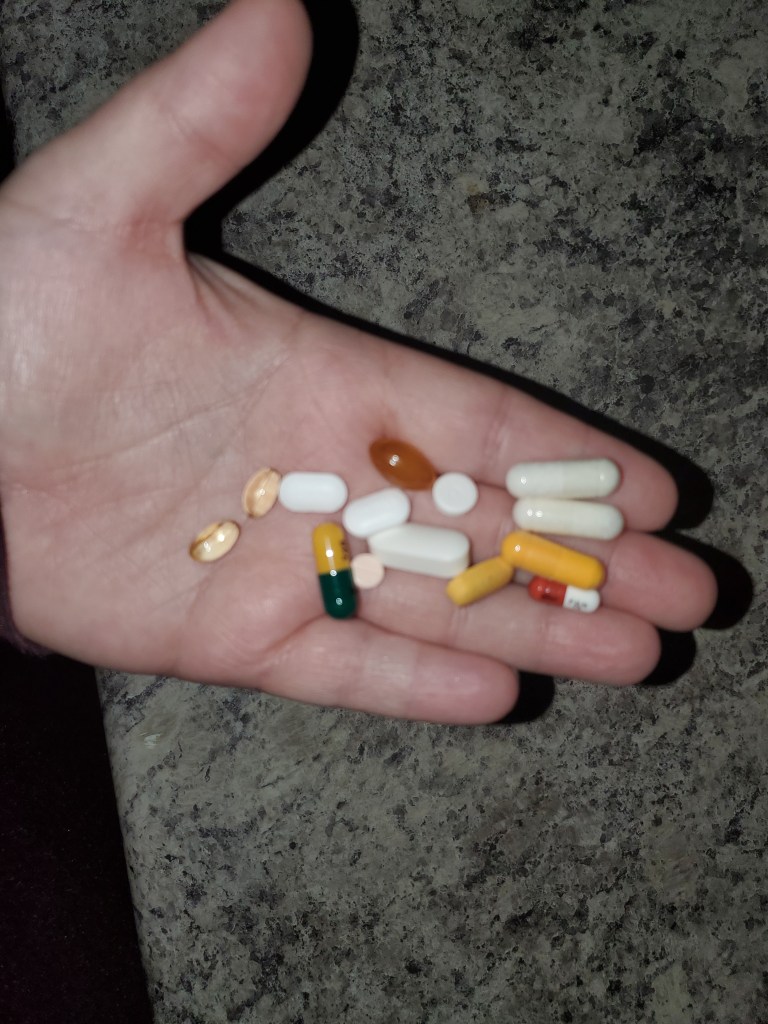
I have a shelf…. that holds EVERY bottle of prescription pills, that followed me everywhere along the way. If you see this shelf, it harbors, the pills, creams, powders, and various elixirs, some of them missing already, that carried me throughout this systemic illness. I don’t use them, some of them are a few years old, but when I was losing my mind, I was trusting that with each symptom, each prescription handed to me, would garner me a glimpse of relief.

Some of those pills did, some did not, and some made me feel like I was going blind, or various other side effects. I’m not saying don’t do what your physicians recommend doing, but remember, I don’t listen, and now I’m hard of hearing (at least in the left ear: never sneeze with a cotton swab in your left ear, you can pop your ear drum, you know that warning label… yeah you get my point)

That my dear is apparently your job, or your care taker’s job. Who has time for that? Well FIND THE DAMN TIME child, your momma isn’t going to do it for you. This was at the point, where I was taking my health into my own hands and REFUSED to let anyone put me in my grave early, or make me leave my kids when they need me the most, without putting up the biggest damn fight of my life. I was supposed to be dead by February of 2022, I’m still here bitches!

You get diagnosed with something like Early Onset Dementia, and literally you are lucky if you have 4 years left. Mind you, I still may have to relinquish to dementia, but dammit…not yet, not right now, I refuse. I am curious about that MRI though, if I have filled the black deficits in my head or not, or if they are getting worse. I do know one thing, this woman right here…. feels better than she has in years, and here I am writing the story to live forever on the interwebs. If you have found me, there is a reason…. stay tuned!!

MCAS: Mast Cell Activation Syndrome

What is this? Allergic to BULLSHIT

“The term “mast cell activation syndrome (MCAS)” is finding increasing use as a diagnosis for individuals who present with signs and symptoms involving the dermis, gastrointestinal track and cardiovascular system; frequently accompanied by neurologic complaints. Such patients often have undergone multiple extensive medical evaluations by different physicians in varied disciplines without a definitive medical diagnosis until the diagnosis of “MCAS” is applied. However, “MCAS” as a distinct clinical entity has not been generally accepted nor do there exist definitive criteria for diagnosis.”[1]

I’m fast forwarding through years of specialists and stories to get you to this point. This is what it is, well sort of. The best way to explain it, is I’m allergic to everything. Essentially, I’m allergic to bullshit, I’m allergic to your bullshit, my bullshit, environmental bullshit… You get the idea.

Best way to describe it, is like this. Today, I want to expose myself to extreme heat, and then work out, by the time I decide to do anything else, take a cold shower (you’re going to get hives) or eat your favorite high histamine meal, or have a margarita, ( be prepped with your epi pen, you may be welcoming anaphylactic shock into your dinner plans) unless you take all the antihistamines necessary to just walk out into the sun.

A basic sunburn makes my face swell and turn me into a sad attempt at looking like Frankenstein. My eyelids, forehead, skin swelled. For the ones who passed 7th grade science…. remember a cell with a nucleus? Remember our skin cells are made up of 7 layers of skin cells? Imagine all 7 layers of cells, swelling like 10x their size. It felt like my skin was a mask on my face, I could do nothing but ingest more antihistamines to get rid of the swelling. ALLERGIC TO A SUNBURN… I think of all the systemic diseases out there, this is the most bullshit illness to deal with. Happiness can easily get sucked OUT OF EVERYTHING you ever experience or have experienced in your life, with one accidental exposure, or spending one extra ounce of energy where it didn’t count that day.

AND IF YOU ARE STRESSED….. just forget about it that day, you might as well stay at home. Each added on additional stressor from that point will shoot you in the foot for days, you’ll wind up in bed anyway, praying to be able to sleep for the following two to three days to recuperate. In fact, sleep is your friend when you have Mast Cell Activation.


Right After the Burn
The Morning After
Swelling Started

[1] Akin, Cem et al. “Mast cell activation syndrome: Proposed diagnostic criteria.” The Journal of allergy and clinical immunology vol. 126,6 (2010): 1099-104.e4. doi:10.1016/j.jaci.2010.08.035